 EN
EN

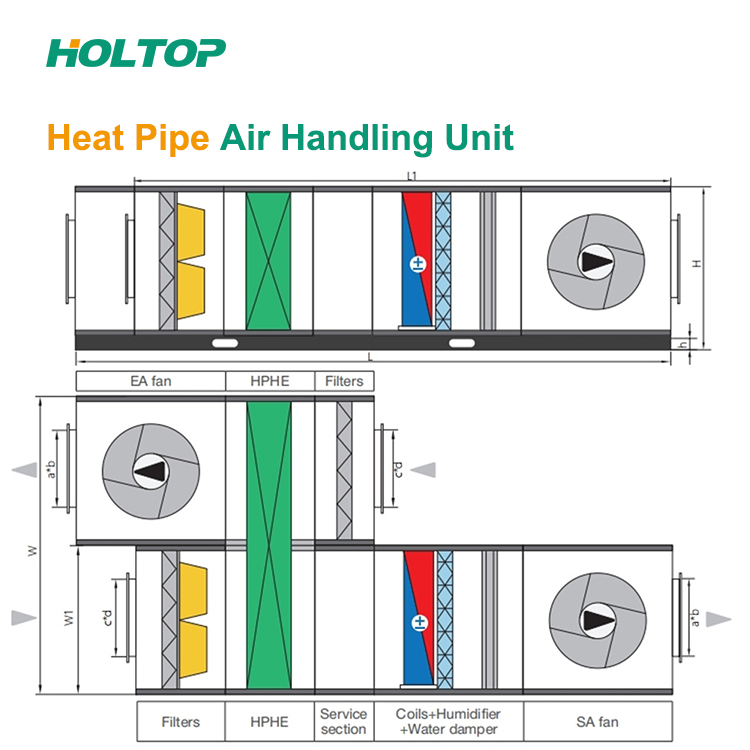
Core Functions and Thermodynamic Roles
Understanding the four core heat exchange components in air conditioning systems—evaporators, condensers, surface coolers, and economizers—reveals how each leverages distinct thermodynamic principles to manage thermal energy. Together, they form the operational foundation of HVAC efficiency, enabling precise, responsive, and energy-conscious climate control.
How Evaporators and Condensers Enable Refrigerant Phase Change
Evaporators pull both sensible and latent heat out of indoor air, which causes the refrigerant to turn from liquid into vapor. This is actually pretty efficient cooling that follows the basic rules of thermodynamics. On the other side, condensers send all that collected heat outside, turning the vapor back into liquid form again. The whole system works because of these pressure differences. Lower pressure inside evaporators means the refrigerant boils at a lower temperature, whereas higher pressure in condensers makes it condense at a warmer temperature. When this happens, the refrigerant can grab around 200 BTU per pound of latent heat during evaporation, and then releases exactly the same amount when it condenses later on. According to the second law of thermodynamics, heat naturally moves from warmer areas like indoor spaces or hot refrigerant vapor to cooler spots such as chilled coils or outside air. This fundamental principle helps maintain stable operation even when loads fluctuate throughout the day.
Surface Coolers vs. Economizers: Indirect Cooling vs. Air-Side Heat Recovery
Surface coolers work by moving heat away from the air using chilled water or glycol running through those finned coils we see in HVAC systems. The nice thing about them is they don't need any refrigerants for this process. Economizers take a different approach altogether. When the weather cooperates, these systems bring in outside air directly to cool things down instead of relying on mechanical chillers. Sometimes they recover energy from exhaust air streams, other times they just skip the mechanical cooling part completely. For buildings located in milder climates where temperatures aren't too extreme, installing economizers can cut down how often chillers and compressors need to run by around 40 percent. That makes a big difference over time both financially and environmentally speaking.
- Media interface: Surface coolers rely on secondary fluid loops; economizers operate exclusively on air-side exchange.
- Environmental suitability: Economizers deliver peak savings in dry, cool conditions; surface coolers maintain consistent capacity—and critical dehumidification—in humid or highly variable environments.
- System role: Economizers act as demand-responsive bypasses, while surface coolers provide controllable, modulated cooling integrated with central chillers. Strategic pairing of both maximizes seasonal efficiency and operational resilience.
Key Structural and Operational Differences
Pressure, Flow Path, and Refrigerant State Across Each Device
The way evaporators and condensers work is pretty straightforward but important for how refrigerants change states. Basically, evaporators run at lower pressures so they can turn liquids into vapors, while condensers need higher pressures to do the opposite and turn vapor back into liquid form. Surface coolers take a different approach altogether. They just transfer heat without changing phases, usually relying on chilled water or glycol mixtures instead of dealing with pressure changes. This makes them simpler in some ways but less versatile for certain applications. Then there are economizers which actually skip the refrigerant part completely. These systems bring outside air in through dampers and plenums to either cool spaces down or recover heat energy. When it comes to actual hardware design, this distinction matters a lot. Evaporators and condensers typically have those closely packed finned tubes to maximize contact area with refrigerant, while economizers focus more on keeping airflow smooth and efficient with their plenum designs and motorized damper systems.
Media Compatibility: Refrigerant, Chilled Water, and Outdoor Air Interfaces
The choice of materials depends largely on what kind of chemicals and temperatures they'll be dealing with day to day. Take evaporators and condensers for instance these components work with pretty harsh refrigerants such as R-410A or R-134a so manufacturers often go for copper or aluminum alloys that can stand up to corrosion over time. When it comes to surface coolers, they usually deal with water based fluids which means the standard approach is epoxy coated carbon steel tubes since this helps prevent both scaling issues and problems from galvanic corrosion. Then there are economizers that sit right at the mercy of outside conditions. These systems face constant exposure to moisture, dust particles, and various airborne contaminants making polymer coated aluminum or stainless steel blades the smart choice if someone wants something durable yet low maintenance in the long run.
| Device Type | Primary Media | Material Requirements | Thermal Transfer Method |
|---|---|---|---|
| Evaporator | Refrigerant (R-410A) | Copper/aluminum alloys | Latent heat (liquid–vapor) |
| Condenser | Refrigerant (R-134a) | Copper/stainless steel | Latent heat (vapor–liquid) |
| Surface Cooler | Water/glycol | Epoxy-coated carbon steel | Sensible heat |
| Economizer | Outdoor air | Polymer-coated aluminum | Direct air-side exchange |
These material and media constraints directly inform maintenance strategy: refrigerant circuits require regular leak testing and charge verification, water loops demand pH monitoring and antifreeze concentration checks, and economizers need seasonal damper calibration and filter integrity validation.
System-Level Integration and Interdependence
Load Balancing: How Evaporator Demand Drives Condenser Rejection Capacity
The evaporator absorbs heat while the condenser rejects it, and these processes are linked thermodynamically. For every watt taken in inside, roughly the same amount needs to go out outside. According to ASHRAE's 2023 fundamentals, if the evaporator temperature drops just 1 degree Celsius, the condenser has to work about 3 to 5 percent harder. This connection matters a lot when trying to optimize COP performance. When condensers are too small for the job, they build up high head pressure which makes everything run less efficiently and could eventually lead to compressor problems. On the flip side, going too big wastes money upfront and doesn't respond well when demand fluctuates. Real world testing indicates that getting the sizes wrong can actually cut down on system efficiency by around 15%. That's why proper sizing based on real building conditions isn't just good practice but essential for anyone designing high performance HVAC systems.
Economizer Synergy with Surface Coolers in Dual-Loop HVAC Configurations
Dual loop systems work with economizers and surface coolers taking turns doing their jobs. The system switches between them based on conditions outside. When the outdoor air gets cool enough (usually under 14 degrees Celsius), the economizer kicks in first. It brings in fresh air that's already cooler than what's inside, so there's no need to run the big refrigeration equipment. Then the surface cooler steps in only when necessary to handle whatever heat or moisture remains after the economizer does its part. These systems use chilled water to make small adjustments to both temperature and humidity levels. This approach can cut down how often compressors need to run by about a quarter to almost half each year in places with average weather patterns. And the savings aren't just about electricity bills either.
- Load sharing ensures neither component operates continuously, extending service life;
- Redundancy allows temporary operation on either loop during maintenance or failure;
- Humidity management is preserved—economizers provide sensible pre-cooling, while surface coolers add precise dehumidification downstream.
This integration exemplifies how thoughtful interdependence among heat exchange devices transforms HVAC systems from isolated components into adaptive, intelligent thermal networks.
FAQ
What are the main components of an air conditioning system?
The main components of an air conditioning system include evaporators, condensers, surface coolers, and economizers. Each plays a distinct role in managing thermal energy through thermodynamic principles.
How do evaporators and condensers work?
Evaporators extract heat from indoor air causing the refrigerant to change from liquid to vapor, while condensers expel collected heat outside by changing the refrigerant back from vapor to liquid.
What's the difference between surface coolers and economizers?
Surface coolers use chilled water or glycol to remove heat, while economizers bring in outside air directly for cooling and can bypass mechanical chillers under suitable weather conditions. Economizers can result in significant energy savings.
How do dual-loop HVAC systems benefit from economizers and surface coolers?
Dual-loop HVAC systems alternate between economizers and surface coolers based on outdoor conditions, reducing the need for mechanical cooling, managing humidity effectively, and achieving significant energy savings.