 EN
EN

Core Definitions and Fundamental Roles in HVAC Systems
What Are Air Rotation Units? Purpose, Mechanism, and Industry Terminology
Air rotation units, or ARUs as they're commonly called, serve as specialized HVAC components for moving air around in big spaces where regular systems just don't work well enough. These units tackle what's known as temperature stratification a problem most people haven't even heard of but affects every warehouse and factory with high ceilings. Warm air tends to get stuck up near the ceiling while the cold stuff hangs out down at floor level where workers actually need it. ARUs fix this issue by setting up controlled vertical air movement patterns that mix things up properly. They rely on those powerful axial fans combined with adjustable vanes to blend different air layers together. According to ASHRAE research from 2022, these systems can reduce temperature differences by about 15 degrees Fahrenheit without needing any extra heating or cooling equipment. Industry folks often refer to them simply as destratification fans or air circulators when talking shop. At their heart though, ARUs are all about saving money on energy bills. When air temperatures become uniform throughout a space, heating costs drop significantly usually between 20% to 30% in facilities where ceilings stretch over 20 feet high.
Air Handling Units (AHUs): Structure, Scope, and Standard HVAC Integration
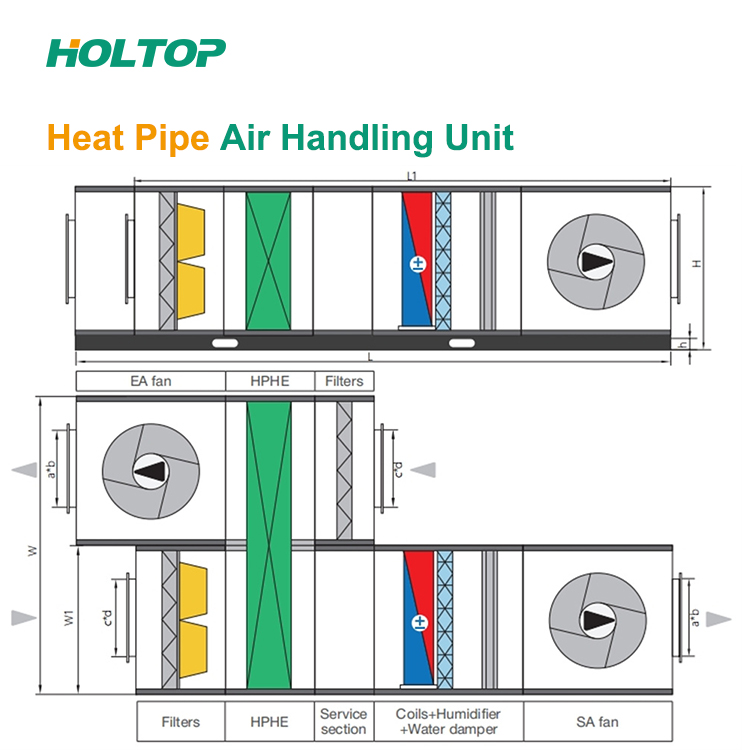
Air Handling Units (AHUs) serve as centralized HVAC engines that actively process air through multiple integrated stages before distribution. A standard AHU includes:
- Filtration systems, typically MERV 8–16 (or HEPA in critical environments), removing particulates down to 0.3 microns
- Heating/cooling coils, using water or refrigerant to precisely control temperature
- Humidifiers and dehumidifiers, maintaining 40–60% relative humidity for occupant comfort and equipment protection
- Energy recovery ventilators (ERVs), reclaiming 60–80% of thermal energy from exhaust air
Air handling units typically sit inside those modular cabinets equipped with variable speed blowers, connecting up to all sorts of ductwork throughout buildings to push out properly conditioned air wherever it's needed. These units basically run the show when it comes to commercial HVAC systems in places like office spaces, medical facilities, research labs, and educational institutions. Why? Because these environments require really tight control over conditions - we're talking about keeping temperatures within plus or minus 2 degrees Fahrenheit, humidity levels no more than 5% variation, and meeting those strict indoor air quality standards set by ASHRAE 62.1. When connected to modern building automation systems, these AHUs can actually make instant changes based on who's occupying the space, what's going on outside weather-wise, and even adjust ventilation rates according to actual demand rather than just running at full blast all day long.
Functional Contrast: Air Movement vs. Full Air Processing
Air rotation units (ARUs) and air handling units (AHUs) actually do quite different things within HVAC systems. ARUs basically focus on moving and circulating air around, typically employing fans placed at specific spots to mix up the air in big spaces. What they really aim for is getting rid of temperature layers so the whole area has consistent warmth or coolness. This matters a lot in places like warehouses and factories where hot air rises and creates wasted energy costs. On the other hand, AHUs handle much more than just air movement. These units take care of filtering air through multiple stages, actively heating or cooling it as needed, controlling humidity levels precisely, and even recovering some energy during operation. The difference between these two types of units becomes clear when looking at what each one contributes to overall climate control in buildings.
The difference in function comes down to basic design approaches. ARUs focus on moving large volumes of air at lower pressures with simple components, while AHUs handle complete environmental control through complex systems working together. When it comes to energy use, we see this divide clearly. ARUs use specially designed fans that move air efficiently, but AHUs consume much more electricity because they run multiple conditioning processes at once. That means ARUs work best in situations where just managing airflow is enough, without needing to control temperature or humidity levels. On the other hand, AHUs are necessary whenever buildings need to meet strict indoor air quality standards, maintain comfortable temperatures, or comply with regulations around healthy ventilation practices.
Component Complexity and System Capabilities
AHU Components: Filtration, Conditioning, Humidification, and Energy Recovery
Air handling units bring together several different parts to process air effectively. Most setups feature HEPA filters that trap around 99.97% of particles larger than 0.3 microns, plus heating and cooling coils that keep temperatures just right. Many also have humidifiers to maintain comfortable moisture levels between 40% and 60%. Energy recovery ventilators are becoming increasingly common too. These devices grab about two thirds to four fifths of the heat from outgoing air, which cuts down on HVAC costs by roughly 20% to 40% for businesses. While this layered approach lets AHUs produce air that meets ASHRAE Standard 62.1 specs, there's definitely a trade off. The system becomes much more complicated mechanically, takes longer to set up properly, and needs regular attention over time compared to basic ventilation options.
Air Rotation Units: Minimalist Design—Fans, Vane Control, and Stratification Management
Air rotation units employ a radically simplified architecture focused solely on optimizing air movement. Their core components comprise:
- High-volume axial fans moving 5,000–50,000 CFM with minimal energy consumption
- Adjustable discharge vanes directing airflow to target specific zones
- Stratification management logic—often embedded in controls—to prevent thermal layering
ARUs work differently from standard AHUs since they don't include any filters, heaters, coolers, or humidifiers. What these units do is simply move around the air that's already inside the building. That makes them great for areas where someone else is taking care of climate control. When ARUs create this vertical movement of air throughout a space, they basically get rid of those annoying hot spots near the ceiling while keeping floors comfortable too. The difference in temps usually drops below that 10 degree mark between ground level and overhead. For big industrial spaces with high ceilings, this kind of air mixing can cut down on heating bills anywhere from 15% all the way up to 30%. Just think about how much money factories save when their heat doesn't just sit stuck at the top anymore!
Application Guidance: When to Specify Air Rotation Units vs. AHUs
Ideal Use Cases for Air Rotation Units: High-Bay Spaces, Warehouses, and Retrofit Ventilation
Air rotation units work best when what we need is focused airflow instead of complete climate control throughout a space. These systems usually have simple axial fans combined with adjustable blades that help mix up the air layers in those tall spaces such as storage facilities, manufacturing plants, airplane maintenance areas, and logistics hubs. When these units push the hot air stuck near ceilings back down towards occupied areas, they can cut heating bills by around 30 percent come winter time. Another big plus is their suitability for older buildings needing better ventilation but lacking proper ducting infrastructure. Most businesses find it makes sense to use what's already there structurally while still getting good air circulation going on. Common places where these systems shine are industrial settings where temperature stratification causes problems and energy efficiency matters most.
- Storage facilities with minimal humidity control needs
- Buildings with ceiling heights exceeding 20 feet
- Industrial sites prioritizing ventilation over temperature precision
When AHUs Are Required: Occupied Commercial Interiors with Thermal, Air Quality, and Humidity Control Needs
Air handling units become essential in spaces demanding comprehensive environmental control. Unlike ARUs, AHUs integrate filters, heating/cooling coils, humidifiers, and energy recovery systems to manage temperature, humidity, and indoor air quality (IAQ) simultaneously. They’re mandatory for:
- Offices, hospitals, schools, and senior living facilities with continuous occupancy
- Environments requiring strict humidity regulation (e.g., laboratories, data centers, pharmaceutical cleanrooms)
- Buildings needing MERV 13+ filtration for airborne contaminant removal
AHUs process outside air at scale—typically ranging from 2,000 to 100,000 CFM—making them indispensable when ventilation rates must meet ASHRAE Standard 62.1 for occupant health, safety, and regulatory compliance.
Frequently Asked Questions (FAQ)
What are the main components of an Air Handling Unit (AHU)?
An AHU typically includes filtration systems, heating/cooling coils, humidifiers, dehumidifiers, and energy recovery ventilators.
How do Air Rotation Units (ARUs) function in large spaces?
ARUs focus on optimizing airflow in big spaces by using axial fans and adjustable vanes to blend different air layers and minimize temperature stratification.
Which environments are best suited for AHUs?
AHUs are ideal for occupied commercial interiors, such as office spaces, medical facilities, and educational institutions, where comprehensive environmental control is required.