 EN
EN

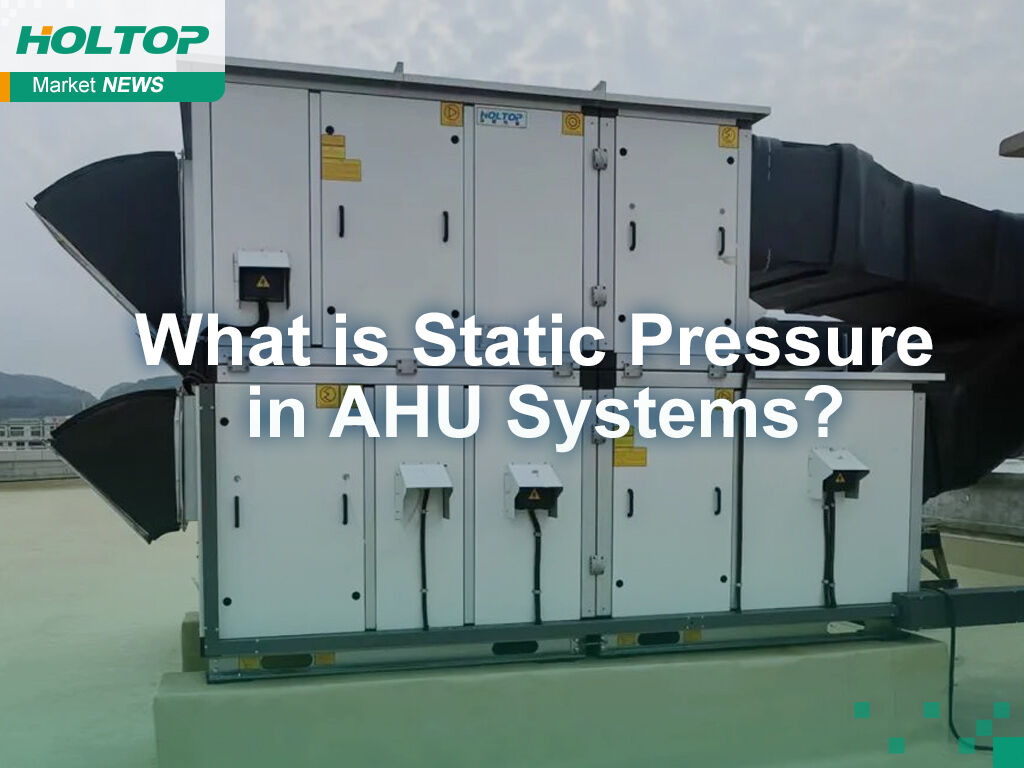
In any air handling unit (AHU) system, static pressure in the ductwork is one of the core parameters that determines whether the system delivers air comfortably, quietly, and efficiently. If the static pressure is not within a reasonable range—either too high or too low—the AHU can become noisy, energy-hungry, and unable to maintain proper temperature and humidity in the conditioned spaces.
This article explains what static pressure means in the context of AHU systems, how it relates to dynamic pressure and total pressure, and how it affects performance, comfort, and equipment life. It also outlines common causes of static pressure problems and practical ways to prevent and correct them.
What Is Static Pressure in an AHU System?
In an AHU duct system, static pressure is the pressure exerted by the air perpendicular to the duct walls, independent of the direction of airflow. You can think of it as the force the air “pushes” on the duct surfaces in all directions, caused by the random motion of air molecules.
From a practical HVAC perspective, static pressure represents the resistance to airflow that the AHU fan must overcome to move air through:
● Filters
● Coils (cooling/heating)
● Sound attenuators
● Dampers
● Supply and return ductwork
● Diffusers and grilles
In other words, static pressure tells you how hard the fan has to work to push air through the system. If the resistance is too high, the fan may still run, but airflow (CFM) will drop, comfort will suffer, and the equipment will be under stress. If the resistance is too low (overly large ducts, oversized returns, leaky ductwork), airflow may become uneven, control can be poor, and the system may behave inefficiently.
For many HVAC designs, static pressure at the AHU outlet is specified as an external static pressure (ESP), which indicates how much pressure is available to overcome the resistance of the duct system downstream.
Static, Dynamic, and Total Pressure: How They Relate
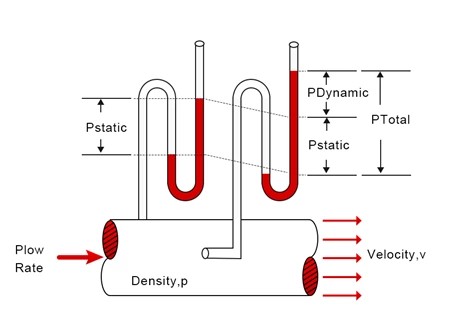
To fully understand static pressure in an AHU, we need to look at three related pressure concepts in fluid mechanics:
Static Pressure (Ps)
● The pressure acting in all directions on the duct wall.
● Related to the potential energy of the air in the system.
● Used to overcome friction and local resistance (filters, coils, bends, diffusers).
Dynamic Pressure (Pd)
● The pressure associated with the velocity of the moving air.
● Represents the kinetic energy of the airflow.
● Given (in SI units) by:
where ρ is air density and V is air velocity.
Total Pressure (Pt)
● The sum of static and dynamic pressure at a given point in the duct:
Inside an AHU and its duct network, static and dynamic pressure can convert into each other. For example:
● When the duct cross-section shrinks (like putting your thumb over part of a hose), airflow velocity increases, dynamic pressure rises, and static pressure tends to drop.
● When the duct expands (such as entering a plenum or static pressure box), velocity decreases, dynamic pressure drops, and some of that kinetic energy is converted back into static pressure.
The fan in the AHU adds energy to the airstream, effectively increasing the total pressure. As air flows through filters, coils, and ducts, part of that total pressure is consumed as static pressure losses to overcome resistance.
How Static Pressure Works in an AHU
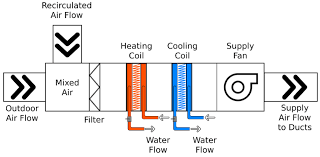
An AHU typically contains:
● Supply fan (and sometimes return/exhaust fans)
● Filters (pre-filters, fine filters, HEPA, etc.)
● Cooling and heating coils
● Humidifiers/dehumidification equipment
● Mixing section (outside air + return air)
● Sound attenuators
● Dampers and control devices
As air passes through each component, static pressure changes:
● Across filters: static pressure drops due to filter resistance, which increases as filters load with dust.
● Across coils: air must pass through finned surfaces and tube bundles, generating static pressure loss.
● Through bends, transitions, and fittings: turbulence and friction consume static pressure.
● Into plenums/static pressure boxes: velocity drops, some dynamic pressure converts to static pressure, helping to equalize pressure and improve air distribution.
The AHU’s supply fan is selected based on the total pressure it must generate so that, after all losses, there is still enough static pressure at the terminal devices to deliver the required airflow (CFM) to each room.
In simplified terms, at a given section of duct:
If you know the fan total pressure and the air velocity at that point, you can estimate the static pressure available to overcome the remainder of the duct system.
Why Static Pressure Matters in AHU Systems
Airflow and Comfort
If the static pressure in the system is not appropriate:
● Too high static pressure (usually indicating high resistance)
● Airflow may drop below design values.
● Certain zones may be under-supplied, causing hot and cold spots.
● Rooms at the end of long duct runs may receive very little air.
Too low static pressure (often from oversized ducts or excessive leaks)
● Air can be poorly distributed and difficult to control.
● Diffusers may not throw air as designed, leading to stratification and uneven temperatures.
In both cases, the AHU may need to run longer to meet setpoints, causing higher energy use and reduced comfort.
Indoor Air Quality and Humidity Control
Airflow is also critical for:
● Correct filtration: The filters in the AHU are designed for a specific face velocity. Low airflow can reduce filtration effectiveness, while very high velocity may lead to filter bypass and higher pressure drops.
● Dehumidification/humidification: Cooling coils remove moisture, and humidifiers add moisture. If airflow is not properly balanced due to improper static pressure, some areas may remain too humid (sticky rooms in summer) or too dry (irritated throat and skin in winter), despite the AHU running normally.
Noise and Equipment Life
Static pressure is closely tied to fan noise and mechanical stress:
● High static pressure means the fan and motor must work harder. This can make the AHU sound like a “jet engine,” especially near the fan or at grilles and diffusers.
● Excessive resistance causes fans, motors, and belts to operate near or beyond their rated limits, shortening equipment life.
● In heating mode, if hot air cannot be moved away fast enough due to high static pressure, components like heat exchangers or coils may overheat and fail prematurely.
Proper static pressure keeps the AHU quiet and long-lasting.
Common Causes of Static Pressure Problems in AHU Systems
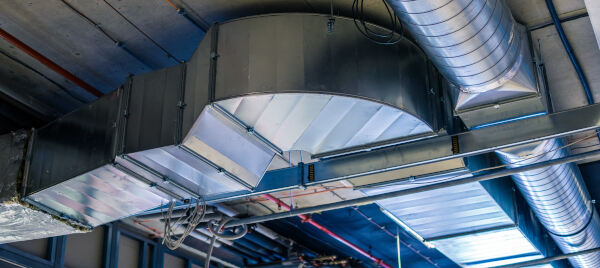
Static pressure issues typically originate from a mismatch between fan capability and system resistance. Common causes include:
Dirty or overly restrictive filters
● Clogged filters dramatically increase resistance and static pressure.
● High-efficiency filters (e.g., HEPA) without appropriate fan selection and duct design can create chronic high static pressure.
Incorrectly sized ductwork
● Too small ducts or undersized returns → high velocities, high friction losses, and high static pressure.
● Oversized ducts → low velocity, low pressure, and poor distribution.
Poor duct and AHU design
● Excessive elbows, tees, sudden contractions/expansions, and long duct runs add unnecessary resistance.
● Lack of proper plenums or static pressure boxes causes uneven distribution to diffusers.
System modifications without recalculation
● Building alterations, such as new rooms, partitions, or expansions, change the required airflow and duct layout.
● Adding new branches or terminal units without re-checking the AHU and duct design can push static pressure outside the acceptable range.
Improper equipment sizing
● Oversized fans/units may push too much air into an undersized duct system, creating high static pressure.
● Undersized fans may not generate enough total pressure to overcome the duct resistance, leading to low static pressure and low airflow.
Diagnosing and Correcting Static Pressure Issues
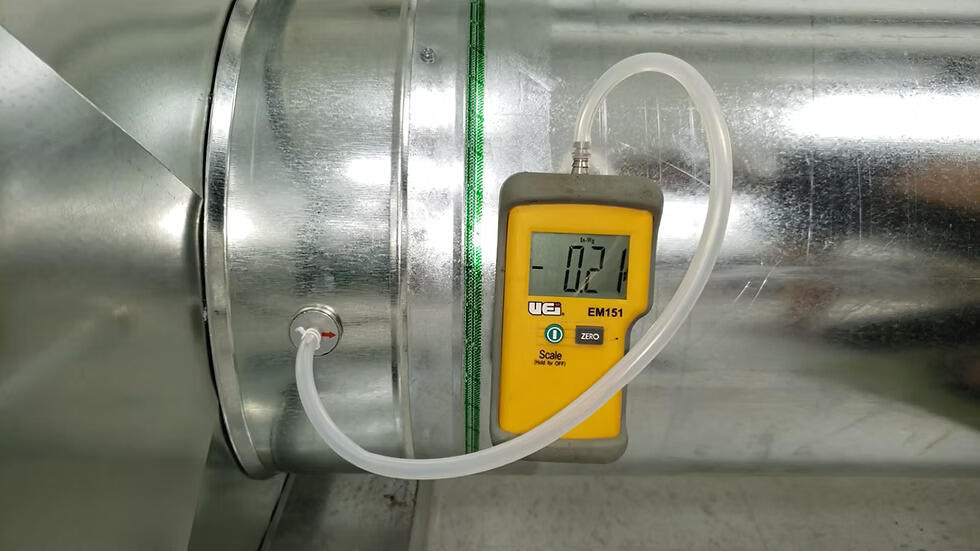
● Measurement and Assessment
Professional HVAC technicians can:
● Measure static pressure at key points in the AHU and duct system (e.g., before and after filters, coils, fan, in main trunks).
● Compare measured values to design specifications and fan performance curves.
● Assess whether filters, coils, and ducts are contributing excessive pressure loss.
For new or significantly modified systems, performing:
● A load calculation (for sensible and latent loads in each zone).
● A duct calculation (similar to Manual D in residential work), using tools such as a duct calculator (“ductulator”) to check duct sizes, velocities, and friction loss.
These steps help ensure that the AHU fan and ductwork are correctly matched.
● Typical Corrective Measures
Depending on findings, corrective actions may include:
● Improving filter strategy
● Replacing clogged filters and establishing appropriate replacement intervals.
● Using deeper filters or larger filter banks to reduce face velocity and pressure loss.
Optimizing ductwork
● Adding or resizing return ducts to relieve negative pressure on the return side.
● Enlarging undersized supply trunks or critical branches.
● Reducing unnecessary fittings and smoothing transitions to minimize turbulence.
● Adjusting AHU fan operation
● For variable-speed fans (VFDs), adjusting fan speed to match design static pressure and airflow.
● Balancing the system using dampers in branches and diffusers to achieve proper airflow distribution.
● Re-sizing or upgrading equipment
● In severe cases where the AHU is fundamentally mismatched with the duct system, replacing the fan or unit—or re-designing major sections of ductwork—may be necessary.
Preventing Static Pressure Problems in AHU Design and Operation
To avoid static pressure issues in AHU systems, consider the following best practices:
● Design Stage
● Perform proper load calculations for each zone.
● Size ductwork based on required airflow (CFM), allowable velocity, and acceptable friction loss.
● Select AHU fans based on realistic external static pressure, including all components: filters, coils, silencers, dampers, and terminal units.
● Commissioning and Balancing
● Measure actual static pressure and airflow after installation.
● Adjust fan speed and balance dampers to bring the system to design conditions.
● Document baseline static pressures and filter pressure drops for future reference.
● Routine Maintenance
● Replace or clean filters according to actual operating conditions (sometimes more frequently than nominal schedules).
● Inspect ducts for leaks, damage, or blockages.
● Monitor unusual noise, hot/cold complaints, and changes in energy consumption—these are often early signs of static pressure problems.
● Ongoing Monitoring and Upgrades
● When building usage or layout changes (new partitions, added rooms, changed occupancy), re-evaluate airflow and static pressure.
● Consider adding sensors and controls to continuously monitor key pressures and adjust fan speed dynamically.
Conclusion
In an AHU-based HVAC system, static pressure is far more than a number on a design drawing. It is a direct reflection of how well the fan, filters, coils, ductwork, and terminal devices are matched and how effectively they work together.
It governs airflow and comfort,
Influences indoor air quality and humidity control,
Affects noise levels, and
Plays a major role in energy efficiency and equipment life.
By understanding static pressure—its relationship to dynamic and total pressure, how it is generated and consumed in the AHU and duct system, and how to measure, adjust, and maintain it—you can design, operate, and optimize AHU systems that are efficient, quiet, and comfortable over their entire service life.