 EN
EN

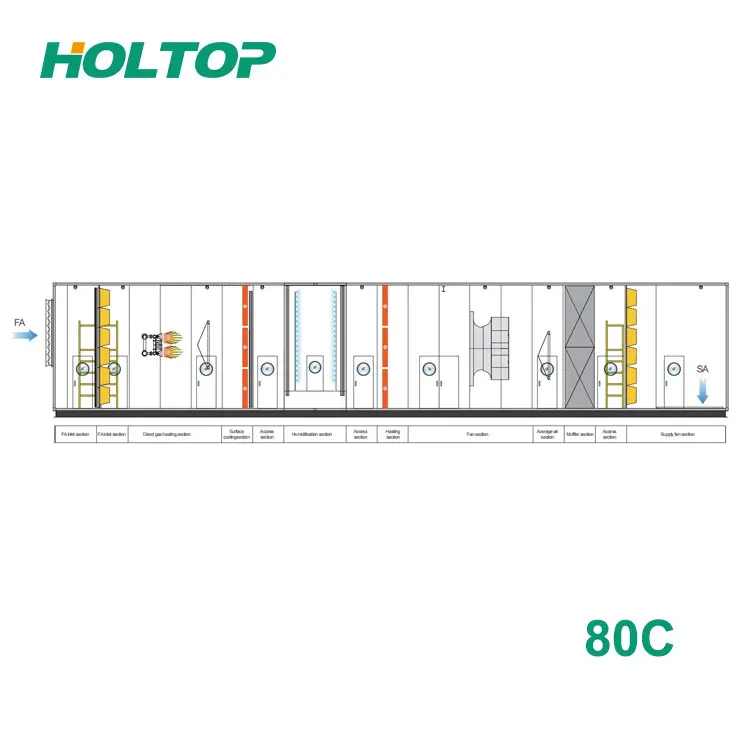
Mastering Industrial Humidity Control with Advanced Ventilation Systems
For facility managers and process engineers, the control of humidity within an industrial facility is often a greater challenge than the control of temperature. Standard ventilation systems, which are designed primarily for thermal comfort, are generally inadequate for managing the substantial moisture loads generated by industrial processes. These systems remove some moisture as a byproduct of cooling, but their design prioritizes the removal of sensible heat over latent heat. In an industrial setting, the sources of moisture are numerous and continuous. Process water, drying operations, steam cleaning, and the infiltration of humid outdoor air all introduce water vapor into the space. When the cooling system is not running, this moisture accumulates, driving the relative humidity to levels that foster mold growth, corrode machinery, and damage products. Understanding the limitations of standard systems and the engineering strategies required to overcome them is essential for maintaining a stable, productive environment.
The Limitations of Standard Ventilation Systems
The fundamental flaw of a standard ventilation system is that it is designed for temperature regulation, not moisture management. The cooling coil is sized to remove sensible heat from the air, and any moisture removal that occurs is incidental. This approach works in a typical office building where the internal moisture load is minimal. However, in a factory, the moisture load is substantial and continuous. When the system is cooling, it may remove some moisture, but when the thermostat is satisfied and the compressor cycles off, the moisture removal stops. The air continues to absorb moisture from the processes, and the relative humidity rises. During the shoulder seasons, when the cooling demand is low, the system may short-cycle, running for brief periods that are insufficient to extract any meaningful moisture. This intermittent operation allows the relative humidity to drift above the threshold where mold and corrosion become active. The result is a damp, uncomfortable environment that accelerates the deterioration of equipment and buildings.
Designing for Dehumidification as a Core Function
A ventilation system that is designed for humidity control treats dehumidification as a core function, not an incidental benefit. The most effective approach is to integrate a dedicated dehumidification system with the central air handling unit. This integrated system uses real-time humidity sensors to dynamically control the cooling, heating, and moisture removal processes. This coordination prevents the common conflict where the cooling system lowers the temperature without adequately addressing the latent heat, leaving the air feeling clammy. Variable refrigerant flow systems enable zone-based humidity control, allowing different areas of the plant to maintain distinct moisture levels based on the sensitivity of the process. The dehumidification capacity must be carefully sized. A coil that is too small will fail to reach the target dew point, while an oversized unit will cycle excessively, reducing efficiency and accelerating wear.
Strategic Airflow for Moisture Management
The physical movement of air within the facility must be designed to manage moisture. Moist air is buoyant and rises. A well-designed system places return air grilles high in the space to capture this rising, moisture-laden air. Supply air, which has been dried and conditioned, is introduced low in the space. This stratified airflow pattern ensures that the moist air is exhausted before it can mix with the drier air in the working zone. For processes that generate significant local moisture, such as washing stations or steam ovens, local exhaust hoods are positioned directly at the source. These hoods capture the moist plumes before they can disperse. In high-ceiling spaces, destratification fans can be used to gently mix the air, preventing a layer of warm, moist air from accumulating at the ceiling level. This mixing can help to equalize the humidity profile, but it must be paired with sufficient drying capacity to handle the redistributed moisture.
The Role of Key Components
Achieving reliable humidity control requires a system of specialized components that work synergistically. The fans must be high-efficiency and corrosion-resistant, capable of moving large volumes of air under varying static pressures. The dehumidification coils must be condensation-resistant, with advanced designs that prevent internal moisture from dripping onto the product. Precision heating elements are required to temper the dried air to the precise setpoint temperature, which is crucial in applications where minor fluctuations can cause material warping. Fans equipped with electronically commutated motors are highly efficient and can adjust their speed based on the duct static pressure, saving energy compared to fixed-speed alternatives. The dehumidification coils should feature sloped drain pans and antimicrobial coatings to prevent the re-evaporation of moisture.
Meeting the Needs of Sensitive Industries
Different industries have different humidity requirements, and the ventilation system must be tailored to meet them. In pharmaceutical manufacturing, strict humidity control is essential to prevent the degradation of active ingredients. A facility that produces tablets may require a system that can maintain a very low relative humidity. An air handling unit with a dew-point-controlled design can achieve this level of precision. In the food processing industry, overhead condensation is a primary concern. A high-volume, low-velocity ventilation system can eliminate this condensation, preventing mold growth and reducing spoilage. In electronics manufacturing, ultra-low humidity is required to prevent electrostatic discharge and corrosion. A laminar-flow ventilation system with chemical filtration can maintain the necessary conditions, reducing defect rates and improving yield.
The Business Case for Investment
Investing in a humidity-optimized ventilation system is not just an engineering decision; it is a strategic business decision. Facilities that have implemented these systems consistently report significant improvements in product quality and operational efficiency. The reduction in spoilage, defects, and rejects translates directly into cost savings. The elimination of condensation-related corrosion extends the life of machinery and building structures. By creating a stable, controlled environment, these systems enable consistent, high-quality production.
How Quality Manufacturing Ensures Long-Term Performance
The long-term reliability of a humidity control system depends on the quality of its components. The corrosion resistance of the coils, the efficiency of the fan motors, and the precision of the control sensors all contribute to the system's ability to perform consistently. Manufacturers who adhere to recognized quality standards, such as ISO 9001, subject their equipment to rigorous performance testing under a variety of conditions. For a facility manager who is investing in a system to protect product quality and extend equipment life, partnering with a disciplined, quality-focused manufacturer provides the ultimate confidence that the investment will deliver its promised return.