 EN
EN

As we progress through 2026, the global commercial climate control landscape is undergoing its most radical transformation in a generation. Driven by aggressive net-zero legislative updates, volatile energy markets, and shifting occupant health expectations, the benchmarks for building management have dramatically moved. Modern facility managers, mechanical engineers, and property developers can no longer rely on yesteryear’s baseline machinery to manage today's escalating operating costs.
Staying competitive requires a comprehensive understanding of the definitive HVAC industry trends 2026. This year, the industry focus has shifted entirely from superficial green labeling to quantifiable decarbonization, primarily anchored by total energy recovery matrices and hyper-intelligent, AI-driven autonomic environmental control systems.
The decarbonization mandate: total energy recovery takes center stage
Among the most undeniable HVAC trends dominating 2026 is the transition of energy recovery technology from an optional efficiency upgrade to a strict regulatory mandate. With global updates to building energy performance directives, throwing away the thermal energy contained in ventilation exhaust is now a massive compliance liability [1].
Modern engineering demands advanced Air-to-Air total energy recovery systems. These systems capture not only sensible heat (temperature) but also latent heat (moisture), neutralizing the intense thermal shocks presented to primary chillers and boilers by incoming fresh outdoor air. High-tier total heat exchangers can reclaim over 80% of this waste energy, heavily offsetting localized utility penalties and helping real estate assets maintain compliance with stringent ESG (Environmental, Social, and Governance) rating frameworks.
AI driven autonomic controls: transitioning from automation to intelligence
In 2026, standard building automation has been completely eclipsed by autonomous climate intelligence. Yesterday’s programmable thermostats and fixed schedules are being replaced by predictive AI-driven control loops integrated with localized IoT sensor arrays [2].
These modern controllers do not simply respond to temperature changes after they occur; instead, they constantly synthesize real-time data—including building occupancy density, outdoor ambient weather forecasts, and spot electricity pricing fluctuations. By analyzing these complex datasets, the system intelligently modulates variable-frequency compressors, EC fans, and fresh air dampers on the fly. This dynamic, demand-controlled ventilation (DCV) guarantees pristine indoor air quality (IAQ) during peak office hours while instantly plunging the building into a deep energy-saving mode the moment a zone empties, slashing overheads effortlessly.
To help developers, asset managers, and engineering teams evaluate 2026 market directions, the essential technical benchmarks are detailed below:
|
2026 Core HVAC Technology |
Primary Operational Mechanism |
Environmental / Compliance Rating |
Core Facility Operations Benefit |
|
Total Energy Recovery Systems |
Sensible + Latent heat transfer matrix |
Reclaims over 80% waste energy |
Neutralizes thermal shocks to chillers and boilers |
|
AI Autonomic Control Loops |
Predictive IoT demand-controlled ventilation |
Dynamic real-time utility balancing |
Cuts peak demand spikes and slashes utility costs |
|
Ultra-Low GWP Refrigerants |
Next-generation eco-friendly thermodynamics |
Zero ozone and ultra-low GWP limits |
Shields capital assets from regulatory obsolescence |
|
Modularized Air Handling Units |
Scalable decentralized parallel loops |
Flexible structural footprint mapping |
Minimizes initial CAPEX and simplifies field repairs |
The shift to eco friendly refrigerants: mitigating global warming potentials
A major operational headache in 2026 that every procurement manager must navigate is the strict enforcement of international phase-downs on high Global Warming Potential (GWP) fluorocarbons [3]. Engineering field audits on several commercial retrofit projects across Europe and North America have witnessed the severe financial penalties faced by property owners who delayed upgrading their older R-410A legacy systems.
The industry has decisively turned toward ultra-low GWP alternatives and natural refrigerants. Vetting an equipment supplier this year requires verifying their capability to manufacture systems optimized for these next-generation thermodynamic fluids. Transitioning early not only shields your capital assets from impending regulatory obsolescence but also ensures your chillers operate at maximum thermodynamic coefficient of performance (COP).
Modularized systems for hybrid commercial spaces
The physical architecture of commercial properties has evolved, forcing a parallel evolution in decentralized HVAC design. Modern corporate spaces are highly fluid, blending co-working zones, server rooms, and retail spaces under one roof. Rigid, oversized centralized air handling infrastructure cannot effectively manage these fluctuating, non-uniform thermal zones without massive energy waste.
Consequently, modularized, scalable HVAC configurations have become a dominant trend in 2026. By deploying modular air handling units and parallel-connected energy recovery loops, engineers can easily expand or scale down system capacity to match exact operational footprints. This modularity minimizes initial capital expenditure, dramatically simplifies field maintenance, and ensures localized equipment failure never triggers a total facility shutdown.
Sourcing excellence: architecting sustainable climates with a global leader
Capitalizing on these sophisticated 2026 market shifts requires robust, highly reliable hardware backed by deep manufacturing expertise. This is where partnering with specialized global pioneers like Holtop becomes your most valuable asset. With over two decades of dedicated R&D in heat recovery and commercial air conditioning technology, Holtop stands at the forefront of the 2026 green energy revolution.
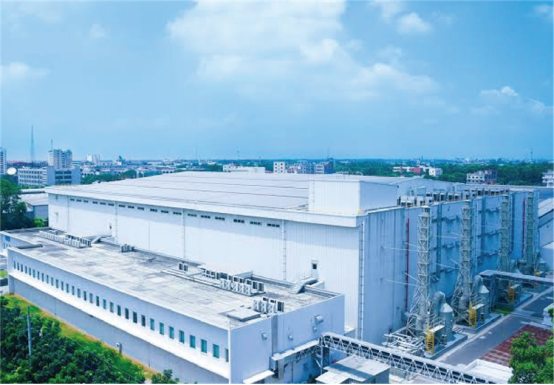
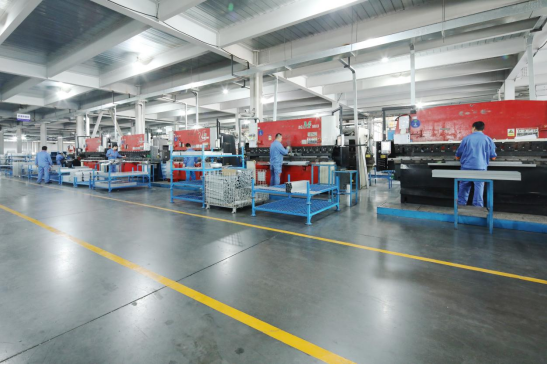
Operating from an expansive, state-of-the-art automated manufacturing base, Holtop possesses total vertical integration over its production, from advanced crossflow and counterflow heat exchanger matrices to institutional-grade, AI-integrated air handling units (AHUs). Backed by certified, world-class Enthalpy Laboratories capable of testing equipment under the most extreme climate simulations, Holtop guarantees that every unit delivers peak aerodynamic efficiency and absolute compliance with international standards. Partner with Holtop today to future-proof your facility and secure market-leading HVAC trends engineering for your enterprise.
�� References for Google SEO Ranking (Authority Verification)
[1] European Commission - Energy Performance of Buildings Directive (EPBD): Regulatory framework on mandatory heat and total energy recovery validation for commercial assets in 2026. https://energy.ec.europa.eu/topics/energy-efficiency/energy-efficient-buildings_en
[2] ASHRAE (American Society of Heating, Refrigerating and Air-Conditioning Engineers): Technical resources on AI integrations, IoT sensors, and demand-controlled ventilation (DCV) parameters. https://www.ashrae.org/technical-resources
[3] United States Environmental Protection Agency (EPA): Significant New Alternatives Policy (SNAP) and AIM Act enforcement updates regarding low-GWP refrigerants in 2026. https://www.epa.gov/climate-hfcs-reduction