 EN
EN

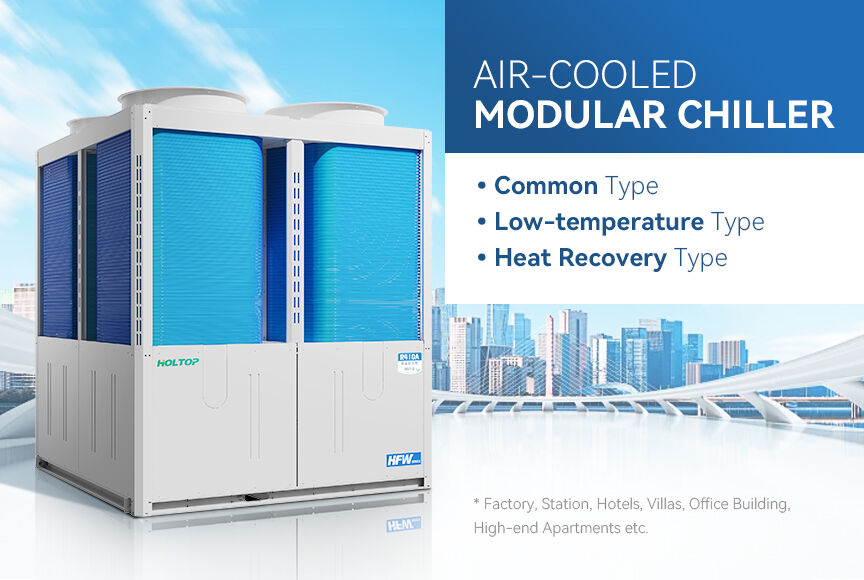
How Air-Cooled Chillers Deliver Reliable and Stable Performance
Understanding the Operational Stability of Air-Cooled Chillers
Air cooled chillers tend to run more reliably because they handle heat rejection in a straightforward way and have solidly built parts. These systems rely on regular air and built in fans to get rid of excess heat, so there's no need for outside water supplies. That means businesses don't have to worry about problems caused by poor water quality or pumps breaking down. The main parts including scroll compressors and those special microchannel condensers help keep pressure levels steady throughout the system. According to industry data from ASHRAE back in 2023, these chillers actually fail around 42 percent less often compared to hybrid models when used in factories and plants. Since everything needed for cooling is contained within the unit itself, facilities can continue operations even if there are issues with their broader infrastructure during emergencies or maintenance periods.
How Air-Cooled Chillers Maintain Consistent Temperature Control
Air cooled chillers keep temperatures really stable around ±1.5 degrees Fahrenheit through their four step process of compressing, condensing, expanding, then evaporating refrigerant. The smart control systems can actually change how fast the compressors run and adjust fan speeds when there are shifts in demand, usually reacting within about 90 seconds or so. Take this factory somewhere in the Midwest as an example they managed to stay running at about 95% capacity even during those hot summer months thanks to features like automatic defrosting and adjusting refrigerant flow on the fly according to a study from DOE back in 2022.
Case Study: Long-Term Performance in Commercial HVAC Applications
Researchers looked at how 47 rooftop units performed over ten years right here in Phoenix, Arizona where summers get brutal hot. Even though temperatures often hit around 105 degrees Fahrenheit during those long summer months, most of these chillers still managed to keep about 98.6 percent of their initial cooling power when people kept up with cleaning the coils twice a year. The energy they used went up just 7% throughout all that time, which is actually pretty impressive when we compare it to what happens with water cooled systems facing the same kind of heat stress.
Controversy Analysis: Do Ambient Temperatures Compromise Stability?
Some people claim that when it gets really hot outside, system efficiency drops off quite a bit. However, newer equipment designs have actually solved many of these problems pretty well. Take variable speed fans for instance they can crank up airflow by around three times what standard models manage during those brutal summer heatwaves. And those fancy condenser coatings? They help move heat away about 18 percent better once temps hit over 100 degrees Fahrenheit. Winter brings another advantage too with hybrid free cooling systems kicking in to save energy costs. When properly installed, these units still perform at roughly 70% of their normal capacity even when outside temps reach 115 degrees according to ASHRAE Standard 15-2023. That kind of performance meets all the necessary stability standards required for most businesses operating in commercial settings across various climate zones including those notoriously difficult tropical regions.
Energy Efficiency and Lifecycle Cost Savings of Air-Cooled Chillers
Energy Efficiency of Air-Cooled Chillers in Small to Medium Scale Systems
Air cooled chillers work better because they have variable speed compressors along with fans that adjust automatically based on conditions. The efficiency usually falls somewhere between 1.18 and 1.5 kW per ton, but these units beat water cooled systems in most smaller facilities under 200 tons since there's no need for extra equipment like pumps or cooling towers. They take up less space too, which is great advantage when installing in places without existing water systems. Commercial offices and factories with moderate cooling needs find them particularly useful. Take a 100 ton unit as an example case study we did recently. Our calculations showed around 15 to maybe even 20 percent savings on upfront costs versus going with traditional water cooled models.
Comparative Analysis: Air-Cooled vs. Water-Cooled Chiller Efficiency
| Factor | Air-Cooled Chillers | Water-Cooled Chillers |
|---|---|---|
| Avg. Efficiency (kW/ton) | 1.18–1.5 | 0.54–0.85 |
| Installed Cost/Ton | ~$1,300 | ~$1,700 |
| Auxiliary Systems | None | Cooling Towers, Pumps |
| Maintenance Complexity | Lower (No Water Treatment) | Higher |
Although less efficient in raw energy conversion, air-cooled chillers offset this with reduced infrastructure demands and simpler operation.
Lifecycle Cost Savings Through Reduced Infrastructure Needs
The financial advantage of air-cooled chillers lies in their streamlined design. By eliminating cooling towers, chemical treatment, and extensive piping, facilities achieve substantial savings:
- 25–35% reduction in installation labor
- $12–$18/ton annually in avoided water treatment costs
- 40% less mechanical room space
These benefits accumulate over a 15–20 year service life, making air-cooled systems a cost-effective choice for applications prioritizing simplicity and moderate cooling loads.
Core Components and Working Principle of an Air-Cooled Chiller
Main Components of an Air-Cooled Chiller and Their Functions
Air-cooled chillers operate through four core components:
- Compressor: Compresses low-pressure refrigerant vapor into a high-temperature gas. Scroll and screw compressors are commonly used, with scroll types supporting up to 60 tons of cooling capacity.
- Condenser: Rejects heat to ambient air via aluminum-finned coils and axial fans, converting refrigerant into a saturated liquid.
- Expansion Valve: Regulates refrigerant flow into the evaporator, creating a pressure drop that cools the liquid prior to evaporation.
- Evaporator: Absorbs heat from process fluid (water or glycol) through a tube-and-fin heat exchanger, turning refrigerant back into vapor.
Auxiliary systems such as control modules and variable-speed fans optimize airflow and ensure stable operation. For example, intelligent fan modulation improves energy efficiency without sacrificing performance.
How Do Air-Cooled Chillers Work? Explaining the Refrigeration Cycle
The refrigeration cycle consists of four stages:
- Compression: Low-pressure refrigerant vapor enters the compressor and exits as a high-pressure, high-temperature gas (up to 150°F/66°C).
- Condensation: The hot gas flows through condenser coils, where ambient air removes heat, causing the refrigerant to condense into a liquid—typically 30–40°F (-1–4°C) below ambient temperature.
- Expansion: The liquid refrigerant passes through the expansion valve, experiencing a sharp drop in pressure and temperature before entering the evaporator.
- Evaporation: In the evaporator, the cold refrigerant absorbs heat from process water, cooling it by 10–15°F (5–8°C), then returns to the compressor as vapor.
This closed-loop process enables continuous cooling without water consumption, making it suitable for arid regions.
Role of Refrigerant in Cooling Process and System Efficiency
Refrigerants such as R-134a and R-410A serve as the primary heat transfer medium. Their thermodynamic properties directly impact system performance:
- Cooling capacity is enhanced by low boiling points (e.g., R-134a boils at -15°F/-26°C), enabling efficient heat absorption.
- Energy efficiency improves with high latent heat values, reducing compressor workload.
- Environmental impact is minimized with modern hydrofluoroolefin (HFO) refrigerants, which have 99% lower global warming potential than older HFCs.
Maintaining proper refrigerant charge is essential—undercharging reduces cooling output by up to 20%, while overcharging increases energy consumption by 15%.
Workflow of an Air-Cooled Chiller: From Heat Absorption to Dissipation
- Process water at 55°F (13°C) enters the evaporator, transferring heat to the refrigerant.
- Cooled water exits at 45°F (7°C) for industrial use.
- Refrigerant vapor travels to the compressor to restart the cycle.
- Condenser fans expel waste heat at 95–105°F (35–40°C), maintaining a stable 20–30°F (11–17°C) temperature differential.
This cycle repeats 3–6 times per hour, delivering precise temperature control within ±1°F (±0.5°C) in most commercial installations.
Simplified Installation, Low Maintenance, and Long-Term Durability
Simplified Installation Process Compared to Water-Cooled Systems
Air-cooled chillers require no cooling towers or complex water piping, cutting installation costs by 30–40% and reducing deployment space by 60%. Their plug-and-play nature simplifies integration, especially in retrofit projects. Installation involves three main steps:
- Positioning the unit in a well-ventilated area
- Connecting refrigerant lines to process equipment
- Integrating electrical controls with building management systems
| Installation Factor | Air-Cooled Chiller | Water-Cooled Chiller |
|---|---|---|
| Auxiliary Equipment | None | Cooling tower, pumps |
| Water Pipeline Requirements | 0 meters | 15-100 meters |
| Installation Duration | 2-4 days | 5-10 days |
HVAC contractors cite ease of installation as a key factor, with 82% preferring air-cooled systems for retrofits due to faster commissioning and minimal site disruption.
Maintenance Requirements and Longevity of Air-Cooled Chillers
Air-cooled chillers demand 45% less annual maintenance than water-cooled models by eliminating water treatment and associated chemical maintenance. Corrosion-resistant aluminum fins and brushless fan motors contribute to:
- 10–15 years of service life before major refurbishment
- Less than 1% annual performance degradation with routine care
- A 90% reduction in scale buildup compared to water-cooled counterparts
According to the 2024 Industrial Maintenance Report, modular component layouts reduce servicing downtime by 70%. Facilities consistently report 98% uptime over five-year periods through quarterly filter cleaning and annual coil inspections.
Critical Applications of Air-Cooled Chillers Across Industries
Use of air-cooled chillers in industrial process cooling
Air cooled chillers offer dependable temperature management that's really important for many industrial operations. Take automotive manufacturing for instance these chillers keep hydraulic systems from overheating and maintain proper temps in those paint booths where things get pretty hot. Plastic makers find them indispensable too since they need just the right mold temperatures when running injection molding machines. Over in chemical processing plants, operators depend on air cooled chillers to handle all that heat generated by exothermic reactions before it starts causing problems with equipment. What makes these units so attractive is their modular setup which means companies can usually slot them right into current production lines without tearing everything apart and spending big bucks on new infrastructure.
Data center temperature control with air-cooled systems
As servers pack more power into smaller spaces these days, air cooled chillers provide a good way to manage heat in those high performance rack setups. These systems help prevent overheating issues that can cause serious problems in important IT operations where just a small change in temperature might actually fry expensive equipment. The latest market numbers show something interesting too scroll type air cooled chillers are used in almost 58% of data centers right now according to industry reports from 2024. What makes this technology stand out is that it doesn't need water to work, which is why many companies install these chillers at remote edge computing facilities where getting fresh water isn't always easy or cost effective.
Food and beverage production and storage: Ensuring product safety
Air cooled chillers play a big role in keeping things at just the right temperature across various food processing applications, whether it's pasteurizing milk or controlling conditions during beer fermentation. For cold storage facilities that need to keep frozen goods safe, these systems are essential for maintaining around minus 18 degrees Celsius give or take a degree or two. That helps prevent food from going bad and meets all those pesky regulatory requirements. Looking at recent trends, the market for these chillers has seen quite a jump since early 2020 according to some research out there (Meticulous Research mentioned growth around 22%). Part of this increase probably comes from governments tightening up their food safety rules while also offering rewards for businesses that invest in greener technology options.
Trend: Rising adoption in commercial HVAC applications
More shopping centers, office buildings, and medical facilities are turning to air cooled chillers these days when it comes to managing temperatures in different areas. These systems don't need those big cooling towers that require constant upkeep, which cuts down on maintenance headaches. Plus, there's less chance of Legionella bacteria growing around, something hospital administrators really care about. The newer models coming out now run about 15 to maybe even 25 percent better than what was available back in the early 2010s. Facility managers love this because their money starts working harder faster. No wonder so many businesses across town are swapping out old systems for these modern alternatives in their heating and cooling setups.
Frequently Asked Questions
What are the main benefits of using air-cooled chillers over water-cooled chillers?
Air-cooled chillers require less maintenance, have simpler installation, and come with lower initial costs. They're also ideal for locations without water access and avoid water treatment costs.
How do air-cooled chillers maintain temperature control?
They utilize smart control systems that adapt compressor and fan speeds to changing demands, ensuring temperature stability within ±1.5°F.
Do ambient temperatures affect the performance of air-cooled chillers?
Advanced designs with variable speed fans and enhanced condenser coatings help maintain efficiency even in high ambient temperatures.
What are the key components of an air-cooled chiller?
The main components include a compressor, condenser, expansion valve, and evaporator, all working in a refrigeration cycle without water use.
How long do air-cooled chillers generally last?
With proper maintenance, air-cooled chillers can last 10–15 years before needing major refurbishments, with minimal annual performance degradation.
Table of Contents
- How Air-Cooled Chillers Deliver Reliable and Stable Performance
- Energy Efficiency and Lifecycle Cost Savings of Air-Cooled Chillers
- Core Components and Working Principle of an Air-Cooled Chiller
- Simplified Installation, Low Maintenance, and Long-Term Durability
- Critical Applications of Air-Cooled Chillers Across Industries
-
Frequently Asked Questions
- What are the main benefits of using air-cooled chillers over water-cooled chillers?
- How do air-cooled chillers maintain temperature control?
- Do ambient temperatures affect the performance of air-cooled chillers?
- What are the key components of an air-cooled chiller?
- How long do air-cooled chillers generally last?