 EN
EN

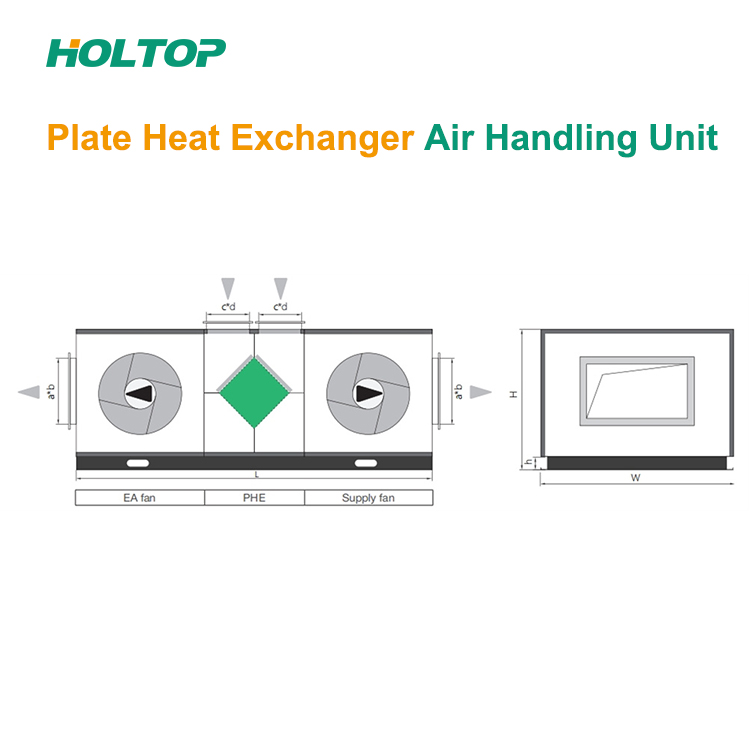
In modern architectural design and HVAC engineering, space efficiency has become a core indicator for evaluating ventilation solutions. A ceiling-mounted fresh air unit stands out as a space‑optimized ventilation system, perfectly solving the contradiction between ventilation performance and installation space through structural innovation, layout flexibility, and integrated design. This article deeply analyzes how ceiling-mounted fresh air units maximize space utilization during installation, helping architects, contractors, and property owners make better equipment selections.
Compact Structure: The Foundation of Space Saving
The primary advantage of a ceiling-mounted fresh air unit lies in its compact and slim body design. Unlike traditional floor‑standing or wall‑mounted air handling units, which require dedicated mechanical rooms or large wall areas, a ceiling‑mounted fresh air unit adopts an ultra‑thin profile, usually with a height of less than 300mm, making it ideal for installation in narrow ceiling interlayers or suspended ceiling spaces. This compact structure is achieved through optimized internal layouts, such as mid‑mounted fans, integrated heat exchange cores, and built‑in filter compartments, which reduce redundant space while ensuring performance.
In addition, the integrated casing design of a ceiling‑mounted fresh air unit further enhances space efficiency. The integrated structure eliminates the need for additional support frames or external connecting parts, allowing the unit to fit tightly into the ceiling space without occupying extra area. This compactness not only saves installation space but also simplifies transportation and positioning, enabling smooth passage through narrow corridors and doorways during construction, greatly reducing on‑site installation difficulty.
Concealed Installation: Making Full Use of Idle Ceiling Space
A ceiling‑mounted fresh air unit achieves true space saving through concealed installation, utilizing the idle ceiling interlayer space that is often overlooked in buildings. This installation method completely hides the main unit and ducts inside the ceiling, with only air supply and return vents exposed indoors, avoiding occupation of valuable floor and wall space.
For commercial spaces such as offices, shopping malls, and hotels, where every square meter of usable area represents economic value, deploying a ceiling‑mounted fresh air unit means more space for business operations, decoration, or functional layout. In residential scenarios, especially small apartments or renovated homes, concealed installation avoids destroying interior decoration styles while providing efficient ventilation, perfectly balancing aesthetics and practicality.
Furthermore, the ceiling installation position keeps the unit away from daily activity areas, reducing noise interference and making the indoor environment more comfortable. The ceiling itself acts as a natural sound insulation layer, further lowering operational noise, which is an additional benefit of space‑saving design.
Flexible Layout: Reducing Duct Space and Installation Complexity
Ceiling‑mounted fresh air units offer excellent installation flexibility, effectively reducing the space occupied by duct systems. The unit supports multiple air duct interfaces, including top, side, and bottom connections, allowing engineers to design the shortest and most reasonable duct routes based on building structure, minimizing bending and length of ducts, thus saving duct installation space.
In multi‑room or multi‑zone ventilation scenarios, a single ceiling‑mounted fresh air unit can achieve regional air supply through shunting ducts, avoiding the need for multiple independent units and reducing overall equipment occupation. This centralized layout not only saves installation space but also lowers system energy consumption and maintenance costs.
For renovation projects, the flexible layout of a ceiling‑mounted fresh air unit is particularly advantageous. It can adapt to existing ceiling structures without large‑scale demolition or reconstruction, minimizing construction space and time, which is critical for projects with tight space and schedules.
Integrated Function: Reducing Additional Equipment Space
Modern ceiling‑mounted fresh air units integrate multiple functions such as heat recovery, filtration, dehumidification, and silent operation, replacing the need for multiple independent devices and further saving installation space. The built‑in heat exchange core recovers energy from exhaust air, reducing the load on supporting air conditioning or heating systems and eliminating the need for extra energy recovery equipment.
High‑efficiency multi‑stage filtration systems are integrated inside the unit, removing PM2.5, pollen, and harmful gases without external filter cabinets. Some models also feature intelligent control modules, enabling remote monitoring and regulation without independent control boxes, simplifying the system and saving space.
This integrated design transforms the traditional "multiple devices + multiple installations" model into an all‑in‑one solution, greatly reducing the overall space required for the ventilation system while improving stability and ease of maintenance.
Wide Application: Space‑Saving Solutions for Multiple Scenarios
The space‑saving advantage of ceiling‑mounted fresh air units is widely reflected in various buildings. In commercial buildings, they free up rental space; in industrial plants, they avoid occupying production areas; in hospitals and clean rooms, they meet strict space and air quality requirements; in data centers, they cooperate with cooling systems to optimize space layout.
For residential buildings, especially high‑rise apartments with limited space, a ceiling‑mounted fresh air unit provides efficient ventilation without sacrificing interior space, improving living comfort and property value. In old building renovations, its concealed and flexible features solve the pain point of difficult ventilation installation without altering the building structure.
Conclusion
A ceiling-mounted fresh air unit achieves remarkable installation space saving through compact structure, concealed layout, flexible duct design, and integrated functions. It not only meets modern building’s demand for space utilization but also ensures high‑performance ventilation, creating a healthy, comfortable, and energy‑efficient indoor environment.
With the development trend of architectural space refinement and HVAC system optimization, ceiling‑mounted fresh air units will play a more important role in the ventilation sector, becoming the preferred space‑saving solution for global construction and HVAC projects.
Table of Contents
- Compact Structure: The Foundation of Space Saving
- Concealed Installation: Making Full Use of Idle Ceiling Space
- Flexible Layout: Reducing Duct Space and Installation Complexity
- Integrated Function: Reducing Additional Equipment Space
- Wide Application: Space‑Saving Solutions for Multiple Scenarios
- Conclusion