 EN
EN

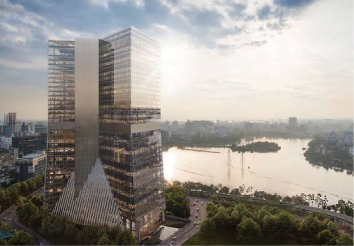
In the modern commercial real estate and industrial design ecosystem, optimizing building air environments has transitioned from a localized wellness initiative into a strict legal and financial liability. Facility managers, MEP (Mechanical, Electrical, and Plumbing) engineers, and property developers must constantly balance rigorous global indoor air quality standards against aggressive net-zero carbon reduction mandates.
Navigating this delicate equilibrium requires absolute alignment with proven engineering criteria. The globally recognized benchmark governing these parameters is established by the American Society of Heating, Refrigerating and Air-Conditioning Engineers. Understanding how engineered ventilation systems directly interface with contemporary ventilation ASHRAE guidelines is paramount to shielding your real estate assets from structural obsolescence while maintaining optimal operational margins.
The gold standard: deciphering the ventilation ASHRAE guidelines
At the center of international building compliance lies ASHRAE Standard 62.1 (Ventilation for Acceptable Indoor Air Quality). This canonical text defines the precise minimum outdoor air ventilation rates and prescribes specific air treatment procedures necessary to minimize adverse health effects for human occupants within commercial zones [1].
Rather than applying a generic, static air exchange factor, the modern standard utilizes the Ventilation Rate Procedure (VRP). This formulaic matrix calculates fresh air supply based on localized zone populations, specific floor areas, and precise space utility types. Complying with these prescriptive rates ensures that common bio-effluents, volatile organic compounds (VOCs), and indoor carbon dioxide ($CO_2$) levels are thoroughly diluted, providing a scientifically verified baseline for healthy occupational environments.
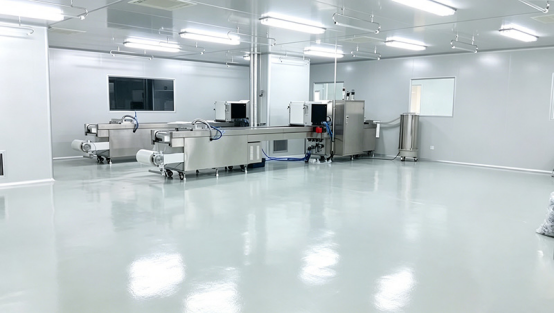
The structural friction: IAQ upgrades vs. escalating operational expenses
Throughout years directing heavy-commercial HVAC engineering overhauls, field engineering audits have repeatedly witnessed a systemic pitfall: the operational cost explosion that occurs when facilities blindly ramp up outdoor air intake to meet upgraded indoor air quality standards.
For instance, during a recent major corporate headquarters retrofit audit in a humid subtropical region, the design team simply increased fresh air volume settings without upgrading their primary thermal treatment capacity. The immediate consequence was a severe moisture-loading crisis. The baseline chillers ran continuously at maximum compressor capacity to fight the outdoor latent heat, driving utility expenses up by 35% and causing systemic coil fouling. This demonstrates that raw volume scaling without thermodynamic mitigation destroys facility efficiency.
To help facility managers visualize the operational trade-offs, the essential structural compliance parameters are detailed below:
|
IAQ & Compliance Metric |
Precision ERV Integrated Scheme |
Raw Volume Outdoor Air Ventilation |
Core Facility Operations Benefit |
|
ASHRAE 62.1 Compliance |
Full (Maintains optimized VRP rates) |
Conditional (Prone to latent load failure) |
Eliminates building health code violations |
|
Thermal Energy Reclaim Rate |
Reclaims up to 80% total heat enthalpy |
0% (Total structural energy loss) |
Slashes main chiller and boiler utility bills |
|
Filtration Capability |
Seamless MERV 13 / HEPA Integration |
High static pressure drop limitations |
Safeguards occupants against PM2.5 and VOCs |
|
Fan Array Operational Load |
Optimized EC Fans with automated torque |
Constant high-speed fixed motor load |
Extends system lifecycle and prevents burnout |
Mitigating the load: energy recovery systems as the regulatory linchpin
To seamlessly align with ventilation ASHRAE guidelines without inflating corporate utility budgets, mechanical engineers must deploy sophisticated energy recovery ventilation (ERV) or heat recovery ventilation (HRV) architecture [2].
These advanced thermodynamic systems place a specialized crossflow or counterflow polymer total heat exchanger matrix directly at the intersection of the building's incoming fresh air and outgoing stale exhaust streams. As the conditioned indoor air is evacuated, its latent and sensible thermal energy is transferred to pre-condition the raw outdoor airstream. Crucially, the air currents pass through separate microscopic fluid channels, guaranteeing zero cross-contamination. By reclaiming up to 80% of this structural thermal waste, the ERV significantly shrinks the cooling and heating tonnage demanded from the primary HVAC plant.
Advanced filtration metrics: merging particulate control with fluid dynamics
True compliance with international indoor air quality standards requires more than simple thermodynamic recycling; it demands rigorous particulate capture. Contemporary ASHRAE recommendations specify that commercial mechanical ventilation systems should incorporate filtration rated at MERV 13 (Minimum Efficiency Reporting Value) or higher to effectively capture sub-micron airborne particulates, including PM2.5 and localized allergens [3].
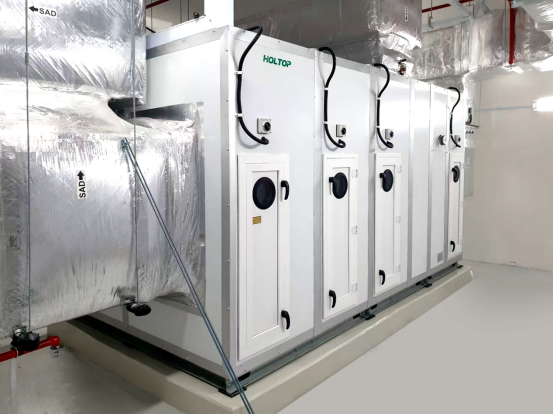
However, integrating high-density MERV 13 or HEPA filters drastically increases static pressure within the air handling pathways. Overcoming this fluid dynamic resistance requires precision-engineered air handling systems equipped with advanced, variable-speed Electronically Commutated (EC) fans. These smart fan arrays automatically adjust their torque based on real-time filter loading, maintaining rock-solid volumetric airflow rates while preventing premature motor burnout.
Future-proof compliance: engineering healthier spaces with a manufacturing giant
Executing an uncompromised air strategy that fully satisfies international building guidelines requires high-reliability equipment sourced from an established technical pioneer. This is where partnering with specialized pioneer Holtop redefines your procurement trajectory. With more than twenty years of focused R&D in energy recovery ventilation and customized air handling unit (AHU) fabrication, Holtop serves as a critical global supply chain backbone for institutional green-building projects.
Operating a massive, highly automated production base and running world-class, state-certified Enthalpy Laboratories, Holtop maintains complete oversight over raw material processing, heat exchanger molding, and aerodynamic efficiency metrics. Whether your project demands standardized ERV matrices or complex, multi-stage customized AHUs designed for LEED compliance, Holtop delivers engineered solutions built for long-term reliability. Contact the Holtop technical application group today to secure a customized thermal and airflow audit for your enterprise.
�� References for Google SEO Ranking (Authority Verification)
[1] ASHRAE (American Society of Heating, Refrigerating and Air-Conditioning Engineers): Standard 62.1-2025/2026 - Ventilation for Acceptable Indoor Air Quality and VRP Engineering Requirements. https://www.ashrae.org/technical-resources
[2] U.S. Department of Energy (DOE) - Federal Energy Management Program: Air-to-Air Energy Recovery Technologies and Heat Exchanger Matrix Efficiency Guidelines. https://www.energy.gov/eere/buildings/commercial-buildings-integration