 EN
EN

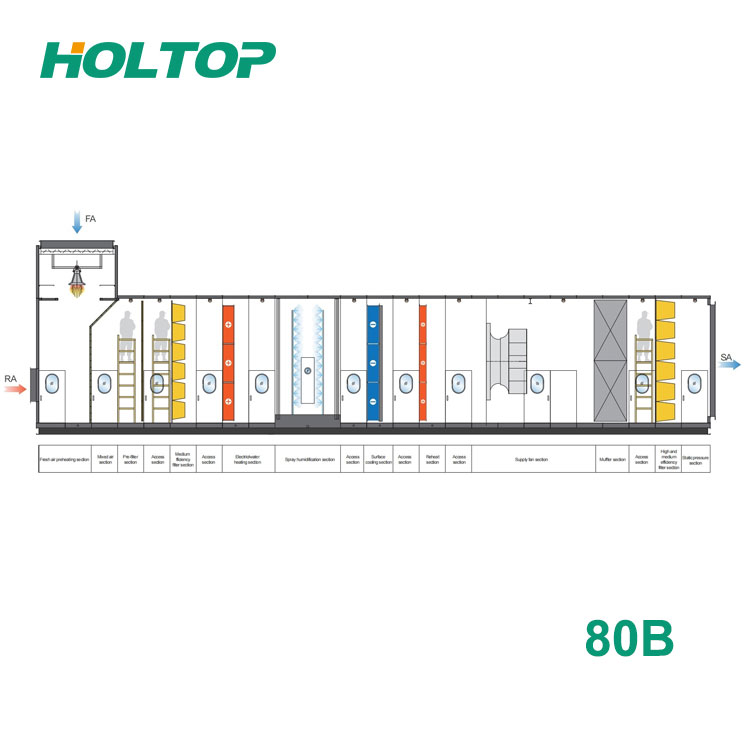
AHU and MAU: Central Air Handling vs. Dedicated Outdoor Air Systems
How AHUs Integrate Mixing, Conditioning, and Distribution for Whole-Building HVAC
The Air Handling Unit, commonly known as an AHU, acts as the central piece of equipment when dealing with climate control in buildings with multiple zones. These units pull in fresh outside air along with some of the already circulating indoor air using those motorized dampers we see on the sides. They mix these together to satisfy building codes for proper ventilation while trying to save energy at the same time. After mixing, the air goes through several stages of filters and coils where it gets cooled down, heated up, or sometimes both processes happen simultaneously depending on what's needed for temperature and humidity levels inside. Once properly treated, centrifugal fans kick in to push this conditioned air out through duct systems throughout different areas of the building. Today's newer models come equipped with Variable Air Volume controls which means they can actually change how much air flows through based on who is actually occupying spaces and what their thermostats are telling them. This helps maintain comfortable temperatures without wasting resources on conditioning empty rooms.
Why MAUs Specialize in 100% Outside Air Pre-Conditioning (ASHRAE 62.1 & 170 Compliance)
Makeup Air Units, or MAUs as they're commonly called, handle only 100% outdoor air. These systems pre-condition raw outside air before sending it into either the main HVAC system or specific areas within a building. The way MAUs work actually stops problems like thermal shock and sudden humidity spikes that happen when big amounts of outside air mixes with already circulating indoor air. For facilities needing to follow building codes, MAUs play a critical role in meeting both ASHRAE Standard 62.1 for proper ventilation and ASHRAE 170 requirements specifically for healthcare spaces. Places with heavy exhaust needs such as labs, hospital operating rooms, and busy commercial kitchens often require over 30 complete air changes every hour. That's why modern MAU designs include features like enthalpy wheels which recover heat energy and powerful dehumidification coils. These components help maintain stable conditions while staying within regulatory limits, all without putting extra strain on other parts of the HVAC system downstream.
HEPA, FFU, and FCU: Filtration Hierarchy and Terminal Air Delivery
HEPA Filters as the Performance Benchmark: Standards, Efficiency at 0.3 µm, and Critical Applications
HEPA filters, which stand for High-Efficiency Particulate Air, are basically the gold standard when it comes to removing tiny particles from the air. These filters can catch about 99.97 percent of particles around 0.3 microns in size, which happens to be the hardest size to capture according to standards set by EN 1822 and IEST RP-CC001. Such high efficiency isn't just nice to have but absolutely essential in places like pharmaceutical cleanrooms, biosafety laboratories, and hospital isolation areas where controlling airborne pathogens literally means the difference between safety and disaster. The magic behind HEPA filters lies in their construction: they consist of multiple layers of fibers that trap those microscopic particles through several mechanisms including interception, inertial impact, and simple diffusion. For really important installations, putting HEPA filters right at the supply diffusers gives the last line of defense against any contaminants coming through the ductwork. And before that, installing MERV 8 to 16 pre-filters helps prolong the life of HEPA units by catching bigger particles first, saving money over time.
FFUs for Localized Clean Zones vs. FCUs for Comfort-Centric Recirculation (ISO Class & Thermal Load Alignment)
Fan Filter Units (FFUs) and Fan Coil Units (FCUs) serve fundamentally different purposes in air delivery systems:
- FFUs deliver localized, ISO-classified clean air (per ISO 14644-1) through ceiling-mounted HEPA or ULPA filters paired with integrated fans. They maintain unidirectional airflow in sensitive spaces like semiconductor fabrication areas and biosafety labs""where ceiling coverage (typically 25"“100%) directly determines air change rates and particle concentration control.
- FCUs, by contrast, prioritize thermal comfort using chilled/heated water coils and standard filtration (MERV 8"“13). Installed in offices, hotels, and perimeter zones, they recirculate room air""often blending in limited outdoor air""and handle sensible cooling loads efficiently but lack the filtration capacity for particulate-sensitive applications.
| Feature | FFU | FCU |
|---|---|---|
| Primary Goal | Particulate control (ISO Class) | Temperature/humidity control |
| Filtration | HEPA/ULPA (≥99.97% @ 0.3 µm) | Standard filters (MERV 8"“13) |
| Air Source | Recirculated + filtered room air | Mixes return + outdoor air |
| Energy Focus | Air purity maintenance | Thermal load management |
PAU and RCU: Precision Pre-Conditioning and Room-Level Climate Control
PAU Functionality: Why It Exists Solely to Pre-Cool/Pre-Heat Outdoor Air Before AHU or RCU Integration
The Primary Air Unit, or PAU for short, does just one thing really well conditioning all that fresh outside air before it gets mixed into either an AHU or RCU system. These units can actually cool incoming air down as much as 15 degrees Fahrenheit below what's outside, or warm it up around 45 degrees when needed. This helps take pressure off the rest of the system by handling both moisture and heat loads upfront. We've seen real world results too especially in places like data centers where they need so much ventilation. Studies show these specialized units cut down on main coil energy usage somewhere between 30 to 35 percent. What makes PAUs different from regular AHUs is their specific design for meeting those tough ventilation standards set by ASHRAE 62.1. They maintain good outdoor air quality while still keeping systems running efficiently, which matters a lot in buildings with strict environmental controls.
RCU Role in High-Performance Spaces: Independent Humidity & Temperature Control Without Ductwork
Room Control Units or RCUs offer really precise control over microclimates in tough environments such as those found in pharmaceutical laboratories and semiconductor manufacturing cleanrooms. These units work as standalone systems without needing ducts, and they can maintain temperatures within about half a degree Celsius plus or minus, while keeping humidity levels stable within three percent relative humidity. They do this through built-in cooling and heating coils, along with humidifiers and filters that catch even the tiniest particles. Because RCUs don't rely on traditional ductwork, they eliminate all that complicated piping throughout buildings. This means companies can create exactly the kind of airflow they need for their specific processes, which also cuts down on how much time and money goes into regular maintenance tasks. Some actual field tests have demonstrated that these units keep spaces at ISO Class 5 standards for cleanliness year after year, saving facilities around seventy-four thousand dollars annually on things like cleaning ducts and adjusting airflow balances. For industries where maintaining strict environmental controls is essential, RCUs represent a smart investment that pays off both financially and operationally.
FAQ
What is the primary function of an AHU in a building?
An Air Handling Unit (AHU) is responsible for mixing, conditioning, and distributing air within a building, helping maintain climate control across multiple zones by using fresh outside air and recirculated indoor air.
How do MAUs help in maintaining proper ventilation?
Makeup Air Units (MAUs) handle 100% outdoor air, pre-conditioning it before entry into the main HVAC system, reducing thermal shock and humidity spikes. They are crucial for meeting standards like ASHRAE 62.1 and 170, especially in spaces with rigorous ventilation requirements such as laboratories and commercial kitchens.
Why are HEPA filters considered essential in certain environments?
HEPA filters remove 99.97% of particles around 0.3 microns, making them critical in environments like pharmaceutical cleanrooms and hospital isolation areas where air purity is vital for safety.
How do FFUs differ from FCUs in air delivery systems?
Fan Filter Units (FFUs) focus on delivering ISO-classified clean air using HEPA filters, while Fan Coil Units (FCUs) prioritize thermal comfort, using standard filtration and focusing on temperature/humidity control.
What role do PAUs play in HVAC systems?
Primary Air Units (PAUs) pre-cool or pre-heat outdoor air before it integrates with the HVAC system, helping manage heat and moisture loads, enhancing system efficiency, and meeting ventilation standards.
How do RCUs achieve precise environmental control?
Room Control Units (RCUs) control microclimates with built-in heating/cooling coils and humidifiers, operating without ductwork, making them ideal for high-performance spaces like semiconductor cleanrooms.
Table of Contents
- AHU and MAU: Central Air Handling vs. Dedicated Outdoor Air Systems
- HEPA, FFU, and FCU: Filtration Hierarchy and Terminal Air Delivery
- PAU and RCU: Precision Pre-Conditioning and Room-Level Climate Control
-
FAQ
- What is the primary function of an AHU in a building?
- How do MAUs help in maintaining proper ventilation?
- Why are HEPA filters considered essential in certain environments?
- How do FFUs differ from FCUs in air delivery systems?
- What role do PAUs play in HVAC systems?
- How do RCUs achieve precise environmental control?