 EN
EN

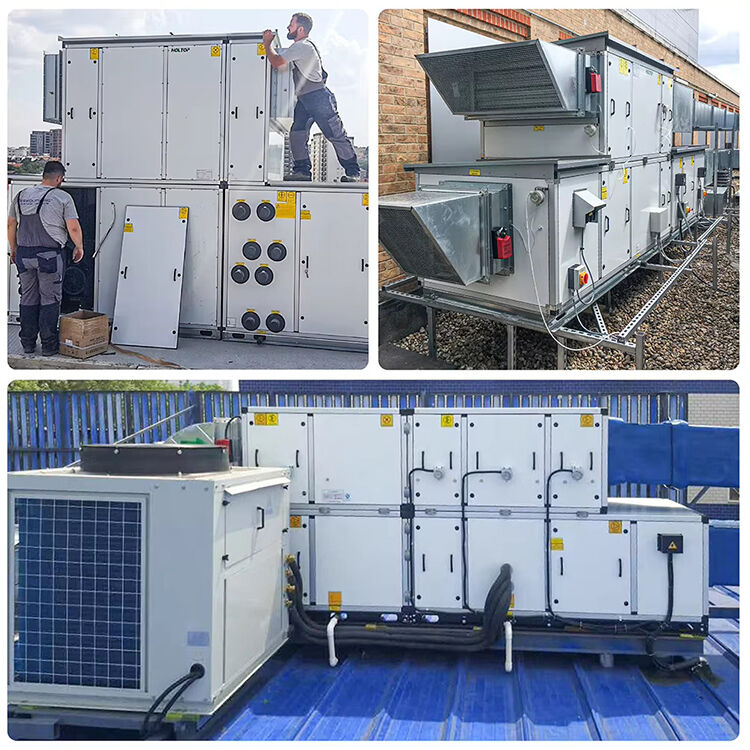
How Air Handlers Influence Indoor Air Quality and Health
The Role of Air Handlers in Maintaining Indoor Air Quality (IAQ)
Air handlers play a big role in HVAC systems by filtering and moving air around to cut down on stuff floating inside like dust, pollen, and even bacteria. When these units have good quality filters such as HEPA or MERV-13 models, they trap about 90% of tiny particles measuring down to 0.3 microns which makes them really effective at keeping allergens and germs under control. The Environmental Protection Agency actually points out that indoor air quality tends to be between two and five times worse than what's outside in buildings with bad ventilation. That's why it matters so much to keep air circulating regularly throughout the space to protect against breathing problems and other health issues related to poor air quality.
Connection Between HVAC System Design and Effective Airflow Management
Getting good airflow really comes down to how well the whole system is put together. Things like variable speed blowers matter a lot, as does making sure the ductwork is sized right for the space. When HVAC units are too big, they end up cycling on and off too frequently, which actually makes them worse at filtering out particles. On the flip side, if the system is too small, it can't keep up with maintaining proper pressure levels across different areas of a building. According to research published by ASHRAE last year, spaces where air gets changed less than five times an hour had about forty percent more pollutants hanging around inside. This shows why finding that sweet spot between saving energy and getting enough fresh air circulation remains such a challenge for facility managers everywhere.
Impact of Poor Air Circulation on Exposure to Indoor Air Pollutants
Poor airflow creates those annoying dead spots where bad stuff builds up, including things like VOCs and CO2. Schools with bad HVAC systems see about 27% more kids missing school because of asthma problems according to the CDC report from 2022. Meanwhile, when office buildings have high CO2 levels floating around, people tend to get tired thinking stuff out. For places in wetter areas, mold becomes a real issue too. Without enough fresh air coming through, mold counts sometimes hit over 1,000 spores per cubic meter. That's way above what experts say is safe at around 500 spores per cubic meter maximum. Pretty scary when you think about it.
Ventilation Standards and Outdoor Air Flow Best Practices in Commercial Buildings
The ASHRAE Standard 62.1 basically requires between 5 and 20 cubic feet per minute of fresh air for each person inside a building, and this varies quite a bit based on what kind of space we're talking about. Since the pandemic hit, there's been a push for even better ventilation standards, especially in places where people are more vulnerable like hospitals and clinics, where they now recommend at least 6 air changes per hour. For those looking to save money on cooling costs without sacrificing indoor air quality, combining demand controlled ventilation systems with energy recovery ventilators works really well. These hybrid setups can actually reduce the load on air conditioning systems by around 35%, which explains why so many green certified offices are going this route these days.
Air Handlers and the Reduction of Airborne Disease Transmission
Role of Air Handlers in Mitigating Airborne Virus Spread, Including COVID-19
Modern air handlers play a critical role in limiting the spread of airborne viruses. Research shows that properly configured HVAC systems reduced the risk of aerosol transmission of SARS-CoV-2 by up to 60% in controlled settings (Bahnfleth et al., 2023). This protection comes through three key mechanisms:
- Dilution: Maintaining at least 6 ACH of filtered outdoor air to lower pathogen concentration
- Filtration: Using MERV-13 or higher-rated filters to trap 90–99% of virus-carrying particles
- Airflow control: Designing directional airflow patterns to isolate contaminated zones
These strategies collectively enhance environmental resilience against infectious outbreaks.
Case Study: Hospital HVAC Systems Reducing Nosocomial Infections
A Pennsylvania hospital upgraded its air handlers with HEPA filtration and UV-C disinfection, achieving a 40% reduction in healthcare-associated infections (HAIs) over 18 months. Key improvements included:
- Operating rooms: Implementing vertical laminar airflow at 20 ACH
- Patient rooms: Establishing negative pressure isolation for airborne pathogens
- Common areas: Utilizing mixed-mode ventilation with 50% outdoor air intake
This demonstrates how targeted mechanical interventions directly improve patient safety.
Public Health Implications in Schools and Office Environments
According to CDC data from 2023, schools that implemented ASHRAE Standard 62.1-2022 for their ventilation saw about 30% fewer student absences due to illness. The numbers get even more interesting when looking at offices. When companies started connecting their air handling units to carbon dioxide monitors and kept indoor CO2 levels under 800 parts per million, they noticed a 25% drop in how respiratory illnesses spread among employees compared to buildings with standard ventilation systems, as reported in the ASHRAE Journal last year. What these stats really show is that investing in smarter ventilation isn't just about comfort anymore it's becoming essential for keeping everyone healthy in places where people gather regularly.
Are Current Ventilation Codes Sufficient for Pandemic Resilience?
While ASHRAE Standard 241-2023 introduces the "Equivalent Clean Airflow Rate" metric to better assess infection control, gaps remain between current codes and pandemic preparedness needs:
| Requirement | Pre-2020 Codes | ASHRAE 241-2023 | Pandemic Needs |
|---|---|---|---|
| Minimum filtration | MERV 8 | MERV 13 | MERV 16 |
| Air changes per hour (ACH) | 4–6 | 6–8 | 8–12 |
| Emergency surge capacity | None | +30% | +100% |
A 2024 NIOSH review of 12 commercial outbreaks found only 58% of buildings meeting updated standards prevented airborne transmission events, indicating that current codes fall short of ensuring full resilience during future pandemics.
FAQ
Q1: What type of filters are recommended for air handlers to improve indoor air quality?
A1: High-quality filters such as HEPA or MERV-13 are recommended as they trap up to 90% of small particles down to 0.3 microns, which helps in controlling allergens and germs.
Q2: How does proper HVAC system design impact air quality?
A2: Proper HVAC design ensures adequate airflow which reduces pollutant buildup. Oversized units or poorly designed systems can lead to frequent cycling or insufficient airflow, lowering air quality.
Q3: How do air handlers help reduce airborne disease transmission?
A3: Air handlers help by maintaining ventilated spaces with at least 6 air changes per hour, using MERV-13 filters or higher, and designing airflow patterns that isolate contaminated zones.
Q4: Are current ventilation standards enough for pandemic resilience?
A4: Current standards may not be sufficient. ASHRAE 241-2023 improves on previous codes but further enhancements are needed to ensure resilience during pandemics, as demonstrated by ongoing gaps identified in commercial outbreaks.