 EN
EN

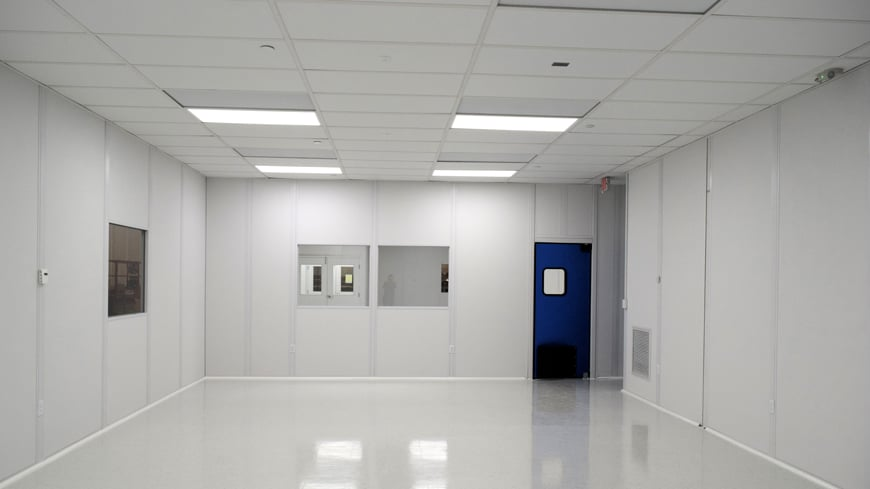
Core Definitions: What Sterile and Clean Rooms Actually Mean
Clean Room: Controlled Environment for Particle Reduction (ISO 14644-1 Standards)
A clean room is a rigorously engineered space designed to minimize airborne particulate contamination—not microbial load. It complies with ISO 14644-1, which classifies air cleanliness by maximum allowable particles per cubic meter (e.g., ISO Class 5 permits ≤3,520 particles ≥0.5 µm/m³). Core engineering controls include:
- HEPA filtration, removing 99.97% of particles ≥0.3 µm
- Controlled pressure differentials, creating cascading airflow to prevent cross-contamination
- Non-shedding surfaces, from walls and floors to furniture and fixtures
Clean rooms prioritize physical particle control over biological sterility—making them essential in semiconductor manufacturing, medical device assembly, and precision optics, where even nanoscale dust compromises functionality or yield. Real-time particle counters continuously verify compliance with ISO-classified thresholds.
Sterile Room: Environment Validated for Microbial Elimination (EU GMP Annex 1, USP <1211>)
A sterile room is a validated subset of cleanroom technology—engineered not just to reduce particles, but to eliminate viable microorganisms through reproducible, documented processes. Governed by EU GMP Annex 1 and USP <1211>, it achieves a sterility assurance level (SAL) of ≤10⁻³ via:
- Unidirectional laminar airflow, typically supplied through ULPA filters (99.999% efficient at 0.12 µm)
- Rigorous environmental monitoring, including settle plates, active air sampling, and surface bioburden testing
- Validated sterilization interventions, such as vaporized hydrogen peroxide (VHP) cycles and strict personnel gowning protocols
Unlike general cleanrooms, sterile rooms require media fill simulations—full-scale mock production runs using growth media—to demonstrate aseptic technique integrity. For ISO Class 5 sterile environments, design standards mandate ≥240 air changes per hour to sustain unidirectional flow and suppress microbial proliferation, directly supporting patient safety in aseptic pharmaceutical manufacturing.
Sterile vs Clean Room: Key Technical and Operational Differences
Air Handling & Filtration: HEPA vs. ULPA, Air Changes, and Pressure Cascades
HVAC systems for sterile environments work towards completely different goals compared to standard clean rooms. The main difference lies in what they need to control - one focuses on keeping particles out while the other aims to eliminate microbes entirely. Both types use high efficiency filters, but sterile areas go further by installing ULPA filters which catch about 99.999% of particles as small as 0.12 microns. That's actually better than regular HEPA filters that only reach 99.97% effectiveness at capturing larger 0.3 micron particles. This extra filtering power makes it possible to remove tiny virus sized particles along with clusters of bacteria, something absolutely necessary when maintaining sterile conditions in labs or pharmaceutical facilities.
The number of air changes varies depending on room classification. For instance, ISO Class 7 cleanrooms generally need at least 20 air changes every hour. Sterile Grade A/B zones require between 40 to 60 air changes per hour. The most demanding environments, ISO 5 sterile suites, actually need as many as 240 air changes hourly to maintain proper laminar flow conditions and quickly reduce any possible biological contamination. When it comes to pressure differentials, things get even stricter. Sterile suites must maintain a minimum difference of +15 Pa between zones, while standard cleanrooms typically work within a range of +10 to +15 Pa. These pressure gradients help create that steady one-way airflow pattern which effectively pushes particles and microbes away from where sensitive operations take place.
| Parameter | Clean Room | Sterile Room |
|---|---|---|
| Filtration | HEPA (99.97% @ 0.3µm) | ULPA (99.999% @ 0.12µm) |
| Air Changes | ≥20 AC/h | 40–60 AC/h (up to 240 AC/h in ISO 5) |
| Airflow Pattern | Turbulent | Unidirectional laminar |
Validation & Monitoring: Particle Counting vs. Bioburden Testing and Media Fill Studies
Validation philosophy diverges sharply: clean rooms are qualified against static and dynamic particle counts per ISO 14644-1, while sterile rooms are validated against microbial risk per EU GMP Annex 1. Particle monitoring remains foundational—but in sterile environments, it serves as a proxy for airflow integrity, not an endpoint.
True sterility assurance demands direct biological evidence:
- Bioburden monitoring via settle plates, contact plates, and active air samplers
- Media fill studies, conducted every six months, simulate worst-case aseptic operations using sterile nutrient broth to detect microbial ingress
- ATP bioluminescence assays, deployed for rapid, real-time assessment of surface cleanliness
In contrast, non-sterile cleanrooms typically undergo annual particle qualification, with no requirement for viability testing or process simulation. This dual-layered validation framework ensures sterile rooms meet the SAL target of ≤10⁻³—meaning no more than one non-sterile unit per 1,000 processed.
Industry Applications: When to Use a Sterile Room vs. Clean Room
Pharmaceutical Aseptic Manufacturing: Why Grade A/B Environments Require Sterility Assurance
When it comes to injectable medications, vaccines, and biological products, maintaining sterility just can't be compromised because microbial contamination really does pose serious health threats that could even be fatal. Regulations set out by standards such as EU GMP Annex 1 require certain cleanroom classifications for key manufacturing processes. Specifically, Grade A (which corresponds to ISO 5 standards) and Grade B (equivalent to ISO 7) environments must be maintained during important operations like filling vials or performing freeze drying. The facilities themselves incorporate features like controlled air flow systems, ultra-low particulate air filters, vapor hydrogen peroxide cleaning methods, and complete body protective clothing for staff. All these measures need to be properly tested using media fill tests and regularly checked through continuous environmental monitoring programs too.
Just focusing on particle control doesn't cut it. According to research referenced by the FDA, around 60 percent of all sterile product recalls actually stem from microbial contamination rather than issues with particles themselves. This highlights why sterile environments need to offer much more than what's required by ISO 14644-1 standards. When looking at things practically speaking, basic cleanrooms serve as necessary foundations for manufacturing processes. But true protection against contamination comes down to having proper sterile rooms in place. These specialized spaces act as critical safeguards that go above and beyond standard requirements to ensure product safety.
Semiconductor and Precision Engineering: Where Particle Control Trumps Sterility
The success of semiconductor manufacturing hinges on getting rid of those tiny sub-micron particles rather than worrying about microbes. Just one speck of dust measuring around 0.1 microns could mess up a transistor gate and waste what might cost upwards of fifty thousand dollars worth of silicon. Because of this risk, most fabrication plants run their operations inside ISO Class 3 to 5 cleanrooms equipped with ULPA filters. They control air movement through either turbulent or laminar flow systems depending where equipment sits relative to each other. Material handling follows strict protocols too. However, unlike biological cleanrooms, these spaces don't need regular checks for microbial contamination, validation tests for protective clothing, or any kind of sterilization procedures between batches.
In fields like precision optical lens manufacturing and putting together aerospace components, keeping those particle counts really low matters a lot for maintaining those tiny surface tolerances at the nanoscale level. Microbes just don't factor into this equation much at all, so spending extra bucks on sterile grade facilities isn't worth it here because it adds unnecessary costs and complications without any real payoff. When deciding between going sterile or sticking with standard clean rooms, manufacturers need to ask themselves what kind of threats they're actually facing. If biology is the main concern, then validation processes, regular monitoring, and active interventions become necessary. But when dealing with physical contaminants instead, the focus shifts toward proper classification systems, effective air filtration methods, and good old fashioned containment strategies make more sense from both a practical and economic standpoint.
FAQ
What is the difference between a clean room and a sterile room?
A clean room focuses on reducing airborne particulate contamination and is governed by ISO 14644-1 standards. A sterile room, however, aims to eliminate microbial presence and follows stricter regulations like EU GMP Annex 1, typically requiring environments with sterility assurance level (SAL) preparations.
Why is microbial monitoring essential in sterile rooms?
Microbial monitoring is crucial in sterile rooms to ensure there are no viable microorganisms that could compromise product safety, especially in industries like pharmaceuticals where contamination can pose serious health risks.
When should a sterile room be used over a clean room?
Sterile rooms are essential for processes that require absolute sterility, such as pharmaceutical manufacturing of injectable medications and biological products, whereas clean rooms are more suited for semiconductor manufacturing and precision optics, where particle control is the primary concern.